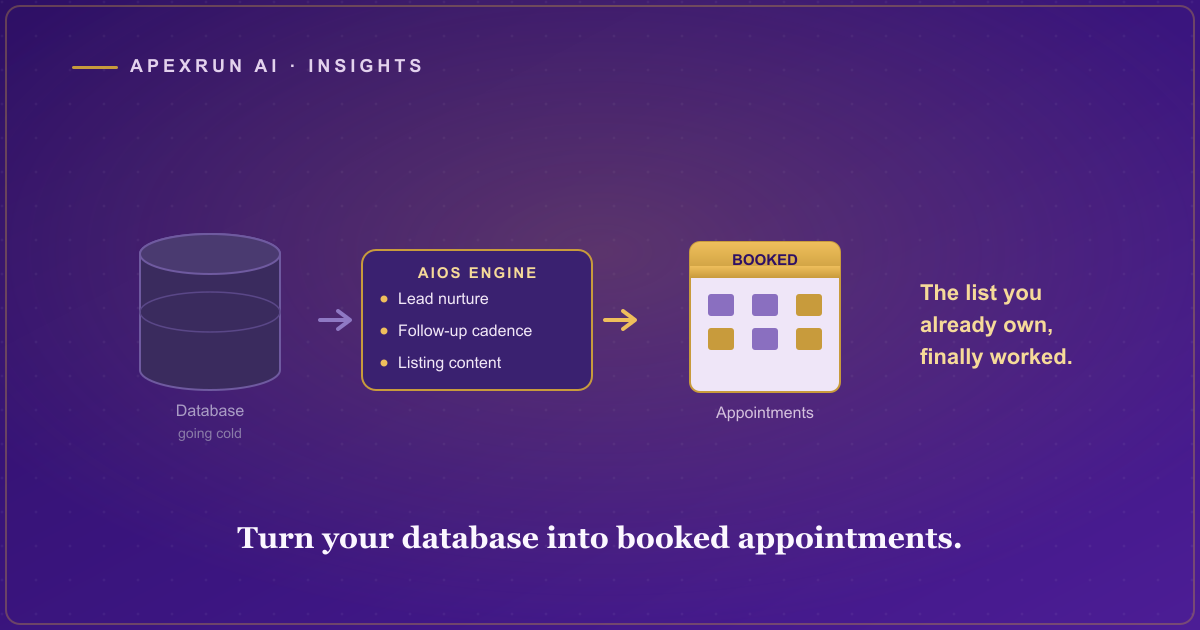
Every real estate team is sitting on a fortune it never touches. It is called the database, and for most teams it is a graveyard. Thousands of contacts, past clients, old leads, open-house sign-ins, people who were going to buy in a year and that year was two years ago. AI for real estate agents starts with a blunt observation: the contacts you already own are worth more than the ones you are paying to generate, and almost nobody works them, because working them by hand is impossible when you are out showing homes all day.
That is the real problem. It is not that agents do not know follow-up matters. Every agent knows. The problem is that follow-up is a discipline that collapses the moment you get busy, and real estate is the definition of busy in unpredictable bursts. The lead comes in while you are at a showing. The past client who would refer you if you stayed in touch has not heard from you in eight months. The database sits there, full of money, going cold, because there is no time in the day to work it consistently by hand.
What AI for real estate teams actually runs
An AI operating system, an AIOS, is built to run exactly the work that dies when an agent gets busy. Three jobs matter most for a real estate team, and a system can carry all three without you touching them.
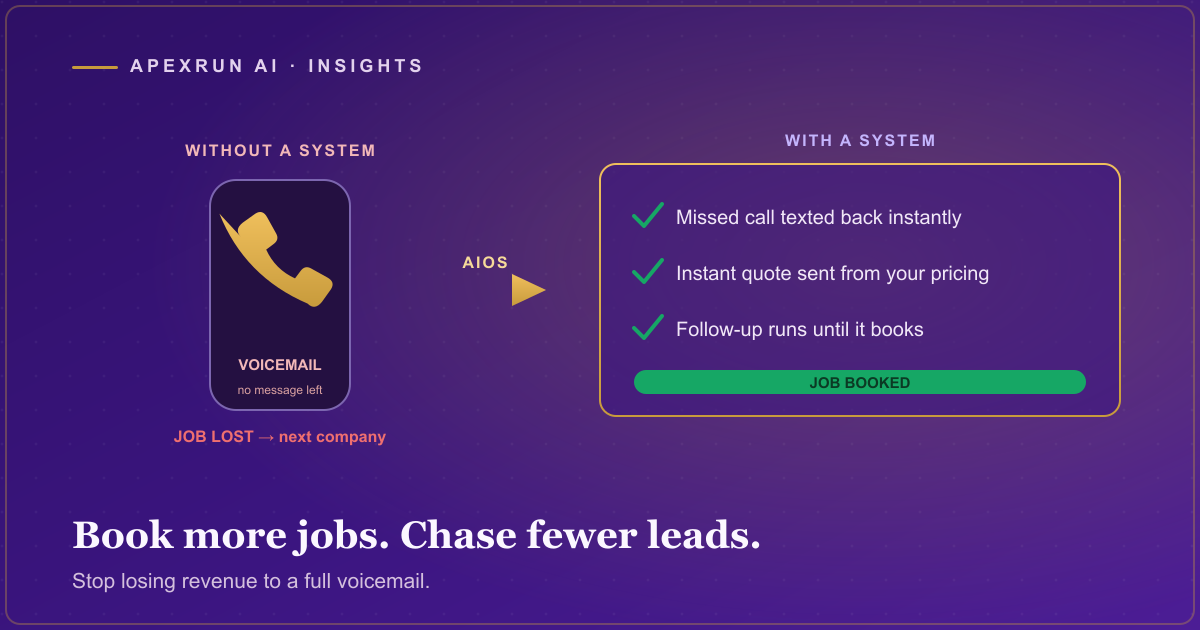
Lead nurture. A new lead comes in and gets a response in minutes, not hours, whether you are free or standing in someone’s kitchen. The system opens the conversation, answers the first questions, qualifies where the person actually is in their journey, and keeps them warm on a cadence until they are ready to talk to you. The lead that used to go cold in the gap between your showings now gets a professional, immediate response every single time.
Follow-up cadence. This is where the database money lives. The system runs the long, patient follow-up that no human sustains: the check-in with the past client, the touch to the buyer who is twelve months out, the re-engagement of the old lead who ghosted. It runs on schedule, every contact, forever, without getting bored or forgetting. This is the difference between a database that produces referrals and repeat business and one that just sits in your CRM as a number you feel vaguely guilty about.
Listing content. The new listing description, the social post, the email to your buyer list about the property that just came up, the neighbourhood summary. The system drafts these from the listing details so you are approving and posting instead of writing from scratch at 11 PM. Marketing a listing stops being the thing you do last and badly, and becomes something that happens fast, on every listing, consistently.
The line: the system nurtures, you close
Here is where I need to be clear, because AI in real estate attracts some genuinely bad ideas. The system does not replace the agent. Real estate is a relationship and judgment business at the point that matters, the negotiation, the advice on the biggest financial decision of someone’s life, the read on what a client actually needs versus what they say they want. No system does that, and you would not want to hand it over.
What the system does is everything that happens before and around that moment. It keeps the top of the funnel warm, works the database, runs the follow-up, and drafts the content, so that when a lead is ready, they land in your calendar as a booked appointment with a person who already trusts your team. You spend your time in the conversations that close deals, not in the nurture work that fills the pipeline. The system is the tireless assistant doing the follow-up. You are the agent doing the deal. That split, the machine prepares and the human handles the moment that counts, is the same principle behind every serious application of this technology, which I laid out in what an AI operating system actually is.
Why this beats hiring another admin
The instinct, when a team realizes its follow-up is broken, is to hire an assistant to work the database. That helps, but it runs into the same wall every real estate team hits: a person has hours, gets sick, takes holidays, and can only make so many touches in a day, and the moment the team gets busy, the admin gets pulled onto urgent transaction work and the database goes cold again. You are back where you started.
A system does not get pulled off. The nurture and follow-up run at the same rate whether it is your busiest week of the year or your quietest, and the cost does not scale with the number of contacts the way another hire would. For the high-volume, always-on, endlessly repetitive work of keeping a database warm, the system is simply the better tool, and it frees the admin you do have to work on the human side of transactions. This is the same reclaimed-hours logic that plays out across professional-services follow-up work, the machine takes the repetitive touches so the people do the work that needs a person.
The math on a warmed database
Run the numbers on your own book. Say your database has a couple of thousand contacts and, worked properly, even a small fraction of them transact or refer over a year that currently do not because nobody stays in touch [ESTIMATED, varies by team]. In real estate, a single additional transaction pays for the entire system many times over. You are not spending to generate new leads. You are spending to finally work the ones you already paid to acquire and then let go cold. That is the highest-return money in the business, and it is sitting untouched right now.
The teams pulling ahead are not the ones buying more leads. They are the ones who turned the database they already had into a machine that produces appointments while they are out doing the deals. You can see how this connects to the specifics of a real estate operation on the real estate command book.
Where to start
Do not try to automate your whole operation at once. Start where the money is leaking fastest, which for almost every real estate team is the database going cold and the leads dropping in the gaps between showings.
That is exactly what the Free CEO Audit maps. In one hour, direct with the decision-maker, we walk through where your leads and past clients are actually falling through, identify the nurture and follow-up a system should run so nothing goes cold, and hand you a prioritized plan, so you know what to turn on first before you spend a dollar. Most teams walk out having realized their biggest untapped asset was the list they already owned.