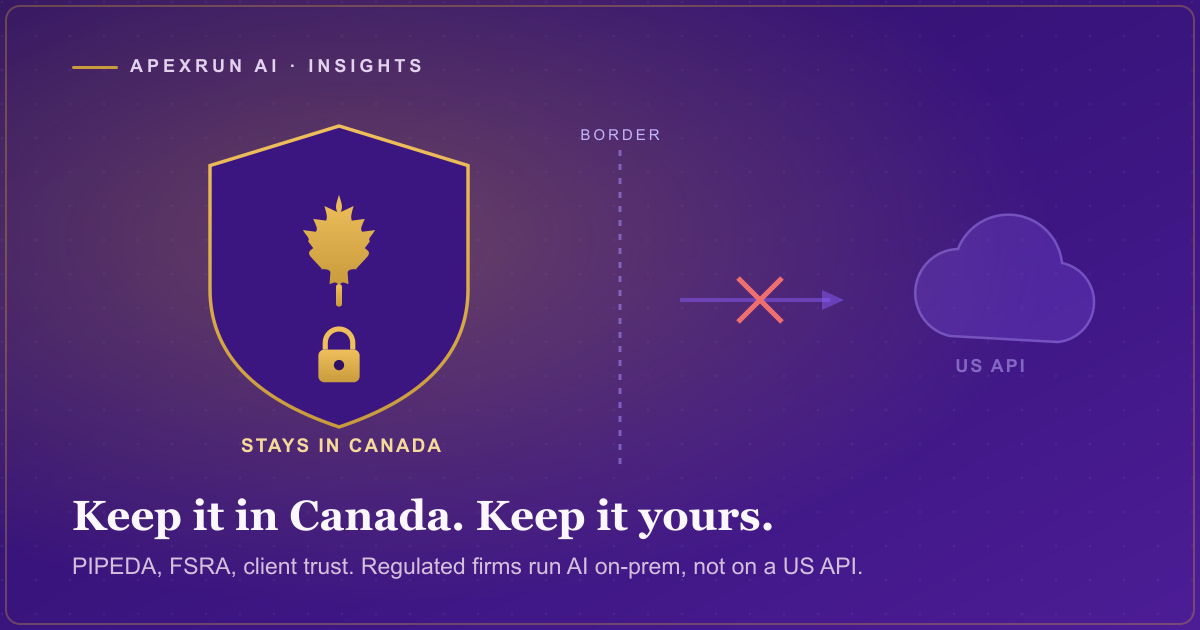
Here is a question most Canadian business owners have never asked about the AI tools they use: where does my client data physically go the moment I paste it in? The answer, for nearly every popular cloud AI service, is a data centre in the United States. Your client’s information, your file, your confidential matter, sent across the border and processed on infrastructure governed by another country’s laws. Data residency for Canada and AI is not a technicality for the IT department to worry about later. For regulated firms it is the difference between a tool you can defensibly use and one that quietly puts you offside your obligations. The good news is the fix is straightforward: run the AI on your own machine, in Canada, and the question answers itself.
I deal with this constantly with Ontario firms, and the pattern is always the same. The efficiency of AI is obvious to them. The data question is what stops them, and they are right to let it.
Why “where the data lives” is a legal question, not a preference
Canadian businesses operate under PIPEDA, the federal privacy law, and depending on the sector, additional regimes on top. PIPEDA does not outright ban sending personal information across the border, but it does hold you accountable for it. You remain responsible for personal information in the hands of any third party you hand it to, including a foreign cloud provider, and you are expected to be transparent with clients about it. The moment your data sits on foreign infrastructure, it is also reachable under that country’s laws, which can compel access in ways Canadian law would not. You have not delegated the risk. You have kept the accountability and added a border.
For regulated sectors the bar is higher. A financial or insurance practice under FSRA oversight, a firm handling sensitive client records, a professional bound by confidentiality: for these businesses “we sent the client file to a US API to draft a summary” is not a story you want to tell a regulator or a client. Client trust runs on the same logic. People hand you their information believing it stays in responsible hands, close to home. “We processed it offshore on a service we do not control” is not what they signed up for, and in a competitive market, being the firm that keeps data in Canada is a real advantage, not just a compliance checkbox.
The cloud AI default quietly ignores all of this
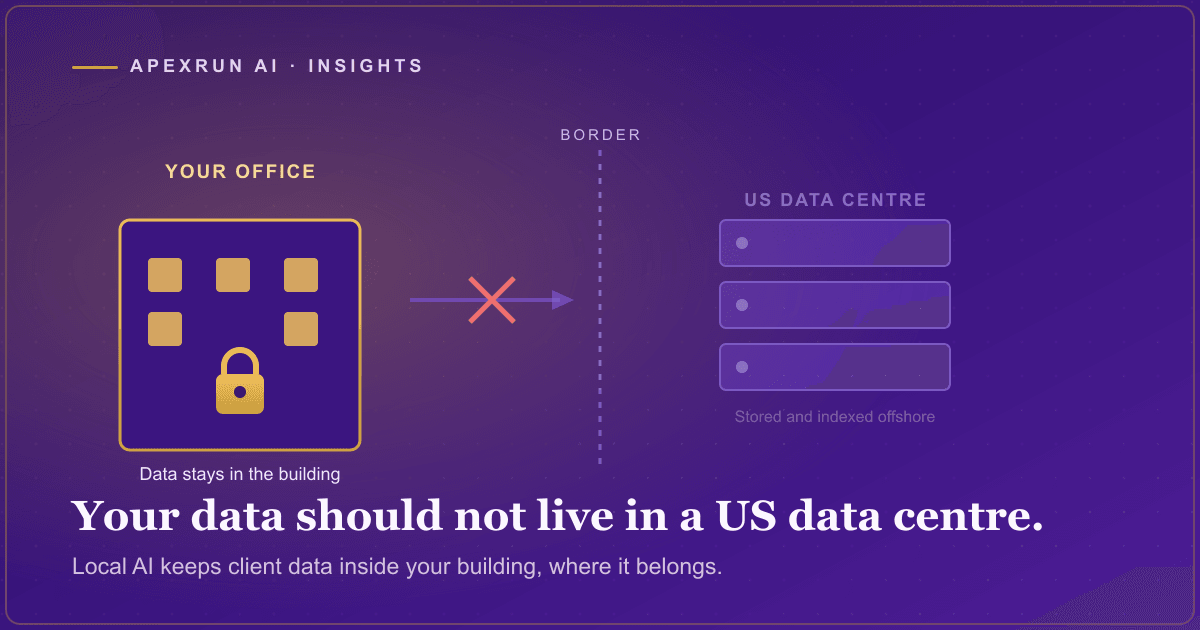
The reason this is a problem is that the default AI tools were never designed with Canadian data residency in mind. They are US services, storing and processing on US infrastructure, and the convenience of pasting your work in hides where that work actually travels. Most businesses using them have never made a conscious decision to send client data offshore. They just opened a tool and started using it, and the offshore trip came bundled in, invisible. I wrote about the broader version of this in Your Data Should Not Live in a US Data Centre, because the exposure is bigger than most owners realize until someone draws them the map.
The trap is that the compliance risk and the productivity gain arrive in the same box. You cannot easily take the efficiency and leave the data exposure, because the exposure is how the cloud service works. So firms do one of two things, and both are bad. They ban AI entirely and fall behind, or they use it quietly and hope the data question never gets asked. Neither is a strategy.
The on-prem answer
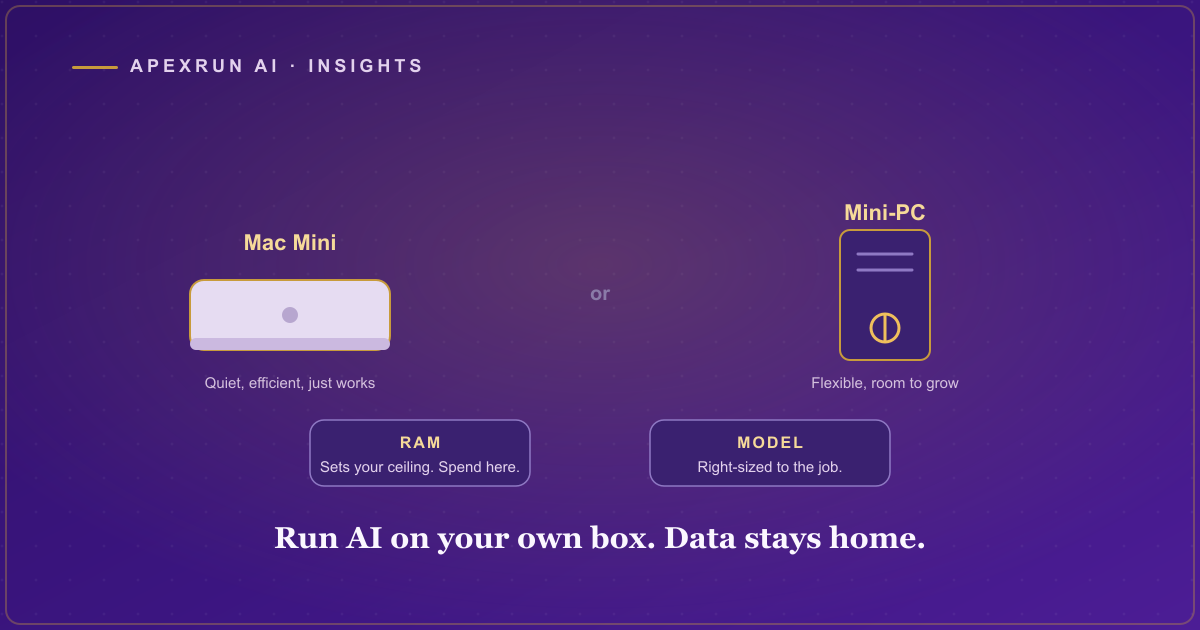
There is a third option, and it is the one regulated Canadian firms should be looking at hard. Run the AI on hardware you own, physically located in your office in Canada. A capable model runs perfectly well on a machine on your premises, and when it does, the data never leaves the building. There is no border crossing because nothing is transmitted to anyone. The drafting, the summarizing, the intake, the research, all of it happens locally, on your machine, under your control, subject to Canadian law and nobody else’s.
This is what actually resolves the tension. You keep the full productivity of AI and you keep custody of the data at the same time, from a single architectural decision. For a firm under PIPEDA and FSRA, “the client information is processed on a machine in our own office and never transmitted” is a clean answer to the residency question, the kind you can give a regulator or a client without flinching. An AI operating system built to run locally is designed around exactly this: the intelligence on your premises, the data in your custody.
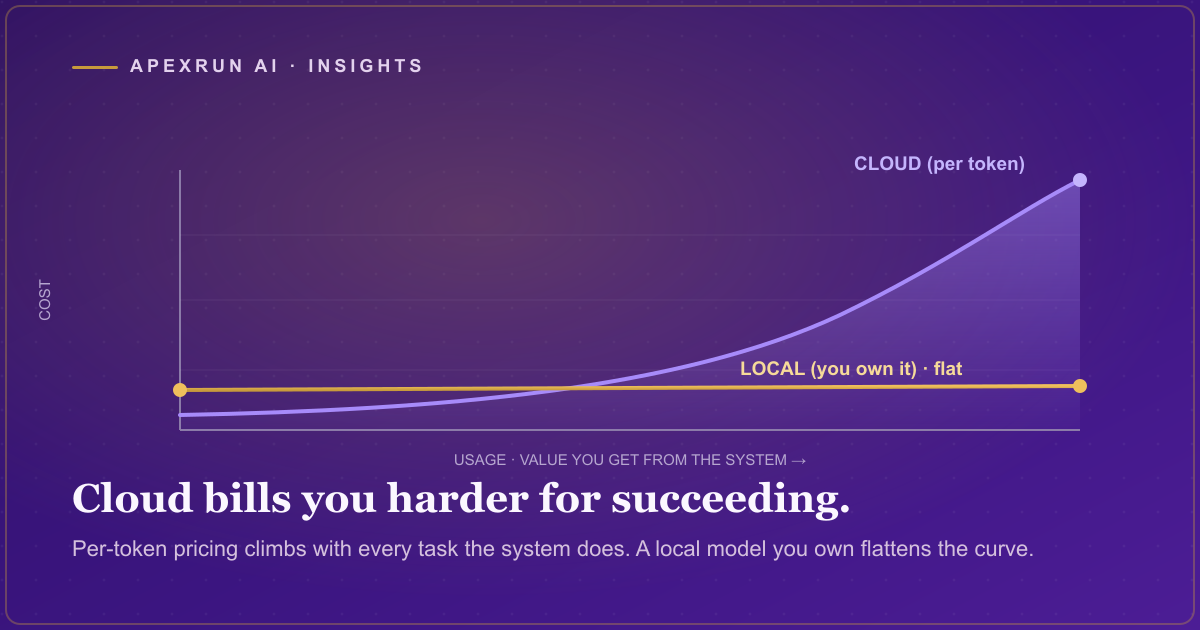
There is a bonus that rides along, which I have written about separately: because it runs on hardware you own, there is no per-token cloud bill either. The same decision that keeps your data in Canada also takes the metered cost curve off the table. Compliance and cost tend to point the same direction here.
What to actually do about it
Start by finding out where your data currently goes. For every AI tool your business uses, ask the plain question: is my client data processed or stored outside Canada, and am I accountable for that under PIPEDA. For a lot of owners this is an uncomfortable first look, because the honest answer is “I never checked.” That is the moment to fix it, before a client or a regulator asks it for you.
Then map which of your work genuinely needs to stay in Canada. Not everything is sensitive, and you do not need to treat a generic marketing draft the way you treat a client’s financial file. But the sensitive work, the regulated work, the confidential work, belongs on infrastructure you control. For the sectors where this matters most, our command book for financial and advisory practices lays out where regulated firms tend to draw that line and what a compliant local setup looks like in practice.
The point is not to fear AI. It is to deploy it in a way that respects the obligations you already carry. For Canadian firms, that means keeping the sensitive data in Canada, on hardware you own, where it stays yours.
The fastest way to sort out what belongs local is the Free CEO Audit. In one hour, direct with the decision-maker, we map where your data currently travels, identify the work that needs to stay in Canada, and hand you a prioritized plan for deploying AI without putting client information offside, so you get the efficiency and keep the custody.