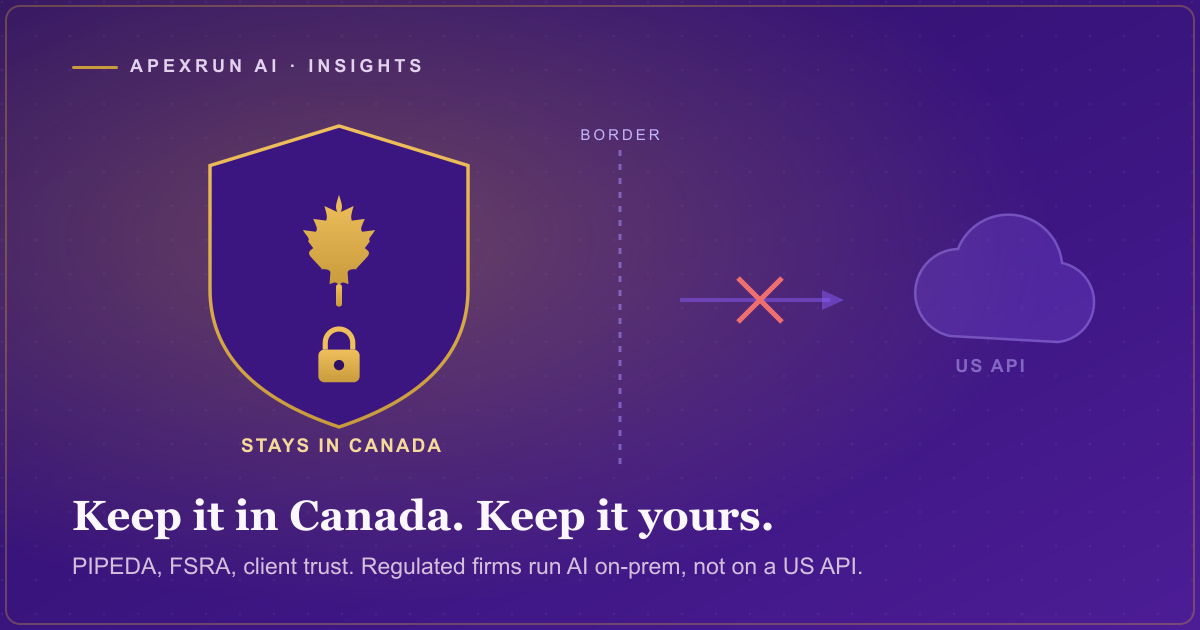
When you paste a client file into a public AI tool, you are not just getting an answer back. You are sending that file to a server you do not own, in a country you do not operate in, run by a company whose terms you did not negotiate. For a lot of businesses that is a shrug. For a law firm, a financial practice, a clinic, or any business holding sensitive records, it should be a stop sign. This is the plainest argument for local AI for business data privacy: the safest place for your client data is the one place a public tool guarantees it will not stay, which is your own building.
Most owners have never actually asked where their data goes when they use an AI tool. The answer is worth knowing before you build your operation on top of it.
Where your data actually goes with a public AI tool
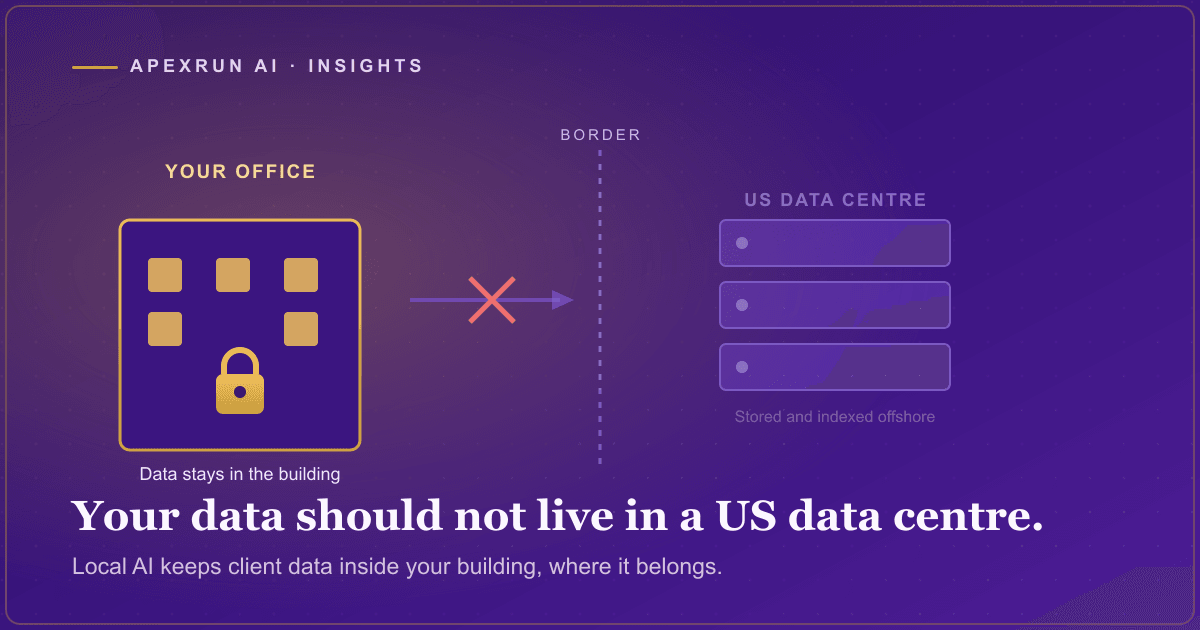
When you use a public, cloud-based AI service, your input leaves your office and travels to that provider’s infrastructure. For the large consumer tools, that infrastructure is overwhelmingly in the United States. Your prompt, and whatever you attached to it, gets processed there and, depending on the service and the plan, may be retained, logged, and in some cases used to improve the provider’s future models.
Read the last part again. On some tiers, the confidential material you fed the tool can become training data. Even where a provider promises it will not train on your inputs, the data still crossed a border, sat on a third party’s servers, and passed through their staff’s access controls rather than yours. You have taken information a client trusted you to protect and handed custody of it to a company they have never heard of, under laws that are not the ones your client assumed applied.
That is a governance problem before it is ever a breach problem. You do not need a leak to be in the wrong. You only need a client, an auditor, or a regulator to ask a simple question: where does this data go, and who can see it? If the honest answer is “a US data centre owned by someone I have no contract with,” you have a hole in your practice.
Local AI keeps the data where custody belongs
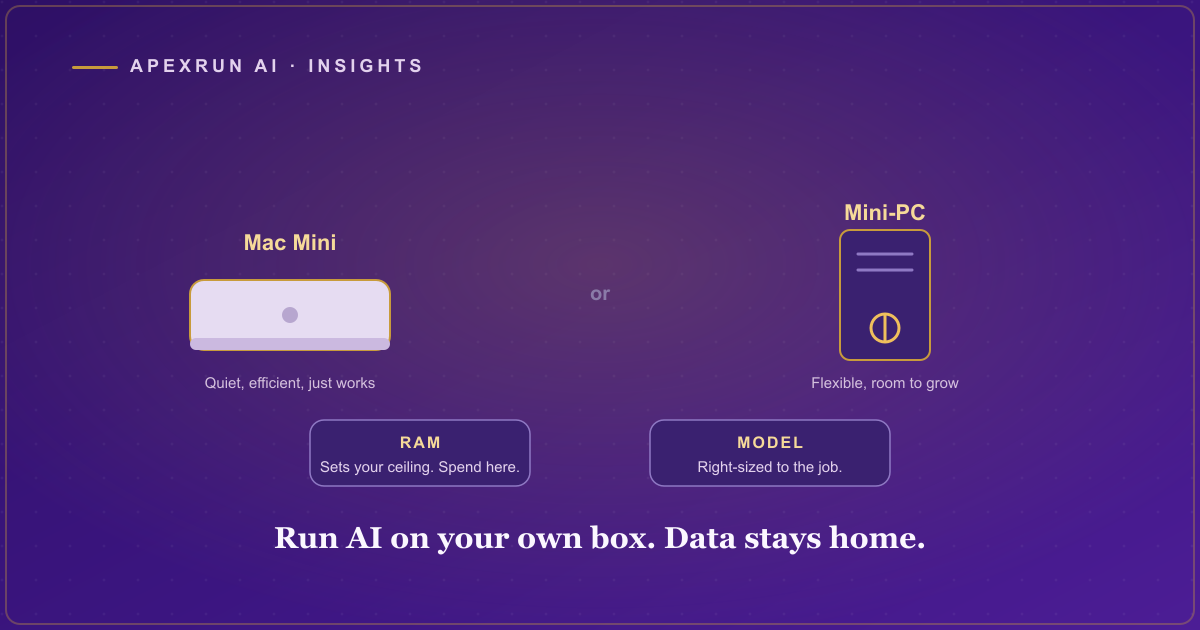
Local AI, sometimes called on-premise or on-prem AI, flips the model. Instead of sending your data out to a cloud service, the AI model runs on hardware inside your own office. A capable machine sitting in your building runs the model locally, so the sensitive information never leaves the premises and never crosses a border. The automation happens where the data already lives.
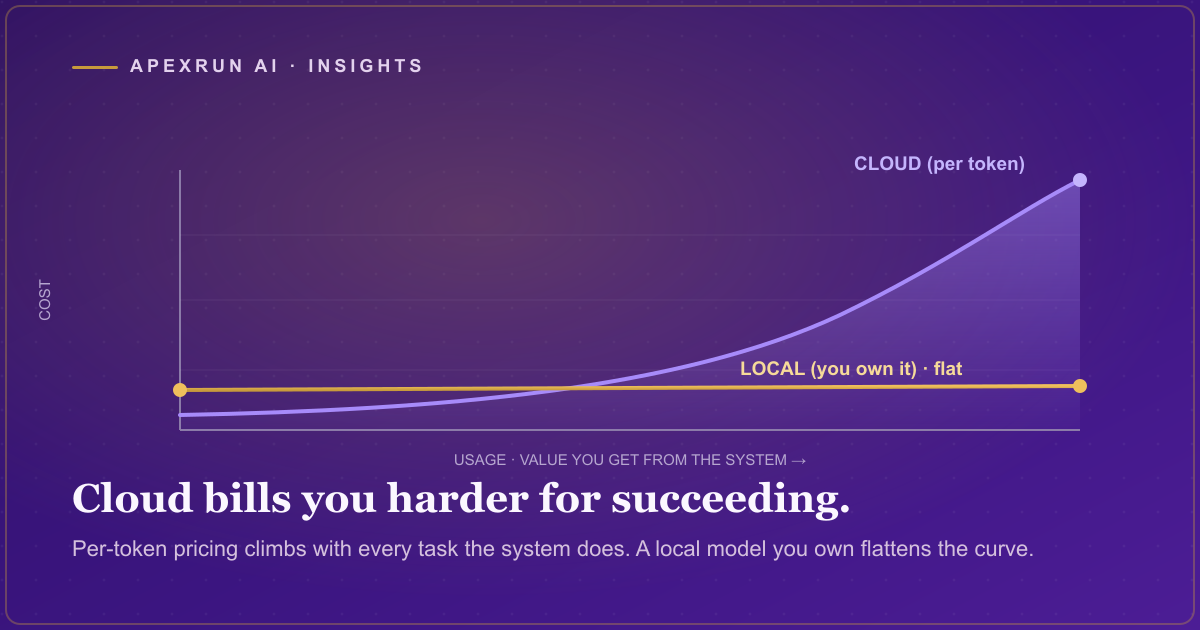
This is not a downgrade. A well-chosen local model handles the document drafting, the summarizing, the intake, the reconciliation, and the follow-ups that make up the bulk of the recurring admin. The difference the client never sees is that none of it left the room. You keep the productivity and you keep custody. As a bonus that has nothing to do with privacy, you also stop paying a per-request cloud fee on your highest-volume work, because it is running on hardware you already own rather than a meter that ticks every time you use it.
For businesses that handle anything confidential, that combination is the whole game. The efficiency was always the attraction. The data residency is what makes it safe to actually deploy.
Why this matters more in Canada, and more in regulated work
If you run a Canadian business, data residency is not a philosophical preference. Under PIPEDA and the sector rules layered on top of it, you are accountable for personal information you hold, including when you hand it to a third party for processing. Cross-border transfer to a US provider does not automatically break the rules, but it does put the burden squarely on you to know where the data goes and to be able to defend that choice. “I did not realize the AI tool stored it in Virginia” is not a defence a regulator, or a wronged client, will accept.
The exposure climbs fast in regulated fields. A financial advisor bound by client confidentiality and record-keeping obligations. A law firm holding privileged material, where a careless disclosure is not just embarrassing but a breach of duty. A medical or dental practice sitting on health records. A bookkeeper or accountant holding a client’s entire financial picture. In all of these, the sensitivity of the data is not incidental to the business. It is the business. Sending it offshore to save a few minutes is a trade no serious operator should make by accident.
Picture the conversation you would rather not have. A client asks, mid-engagement, whether the AI notes you took in your meeting are stored anywhere they should worry about. If your setup runs in the cloud, your honest answer is a hedge: it depends on the provider’s retention policy, the plan you are on, and terms that can change. If your setup runs locally, your answer is one sentence, and it closes the topic: it never left the office. That difference is not cosmetic. It is the difference between a practice a cautious client can trust with their most sensitive matters and one they cannot.
Running the automation locally removes the trade entirely. There is no cross-border transfer to justify, because there is no transfer. There is no third-party retention to worry about, because there is no third party. The leak surface is not managed down. It is removed.
The productivity and the privacy are not a trade-off
The old assumption was that you had to pick: use the powerful cloud tools and accept the exposure, or stay private and fall behind. That assumption is out of date. An AI operating system can run on your own machine and still take the recurring admin off your plate, which means the choice is no longer privacy versus productivity. You get both, and your competitors who are still pasting client files into a public chatbot are carrying a risk you have designed out.
The deeper economic reason this matters, beyond privacy, is that the businesses building on a coherent system rather than a pile of tools are the ones pulling ahead, an argument laid out in The Two-Year Gap. Data residency is simply the version of that argument that regulated firms cannot afford to ignore.
If you are not certain where your business data currently goes when your team uses AI, that uncertainty is worth resolving before it becomes a client’s question instead of yours. The Free CEO Audit maps exactly that: what you are using, where the sensitive data flows, and what a private, local setup would look like for your specific practice. You leave with a prioritized plan and a clear answer to the one question every client is entitled to ask.