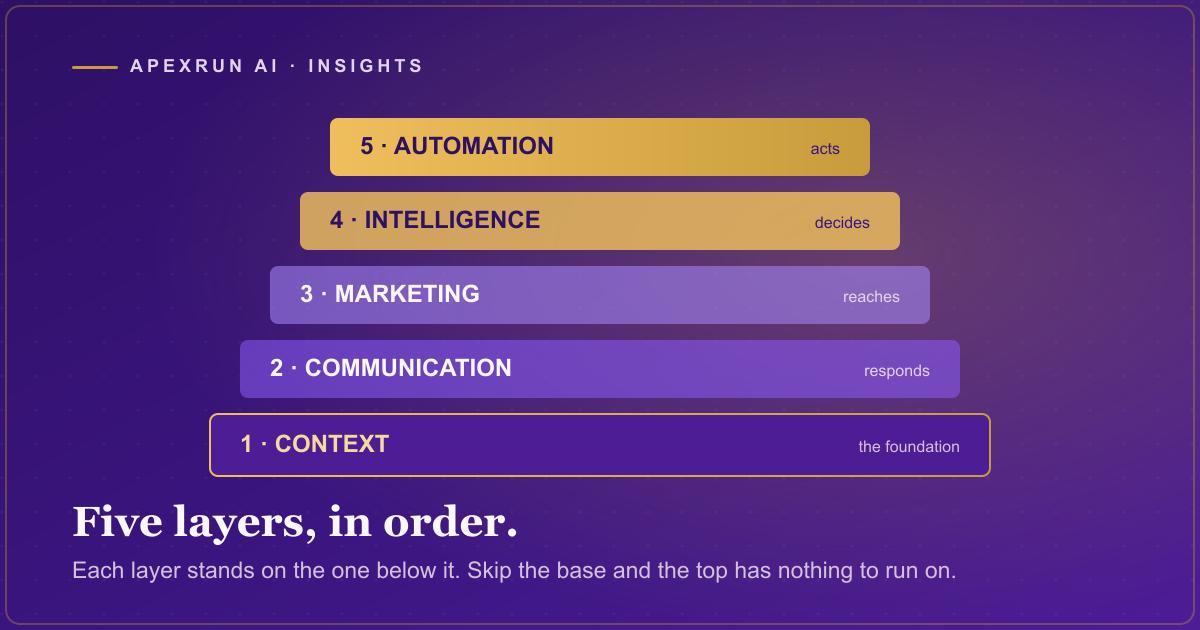
Most people picture AI as one thing: a clever box you type into. That mental model is why so many AI projects stall. A real system is not one box, it is layers, and a five layer AI operating system runs your business the way a building stands up, each floor resting on the one beneath it. Get the order wrong and the whole thing wobbles. Get it right and it holds weight you did not think it could carry.
I want to walk through the five layers in the order they actually stack, because the order is not decoration. It is the reason some AI deployments compound and others collapse into a pile of disconnected tools. If you have not read the plain-English definition of the category yet, What Is an AI Operating System is the companion to this piece and sets up why “operating system” is the right frame in the first place.
Layer one: context, the foundation
Nothing works without this, so it goes at the bottom. Context is everything the system needs to know to act like it belongs in your business rather than like a stranger guessing. Your clients, your services, your pricing, your past conversations, your documents, the way you talk, the rules you never break. It is the memory and the ground truth.
Skip this layer and you get exactly what everyone complains about with generic AI: confident, fluent, and wrong for your business. It drafts an email that sounds fine and gets a detail wrong that a new hire would have known on day one. Context is what turns a general-purpose model into something that understands your specific operation. Every layer above it is only as good as the context underneath, which is why building anything higher first is a mistake. You would be pouring a second storey with no foundation.
Layer two: communication
Once the system has context, it can talk to people without embarrassing you. This layer handles the back-and-forth: answering the incoming question, responding to the intake, replying to the email, picking up the call. It is the part customers actually touch, so it sits directly on context because every response depends on knowing who is asking and what they need.
The reason communication comes second, not first, is the failure mode of doing it backwards. Plenty of businesses bolt a chatbot onto their website with no context underneath, and it answers politely and uselessly, because it does not actually know anything. Communication without context is a call centre reading from a blank script. Communication on top of context is a system that responds like someone who works there.
Layer three: marketing
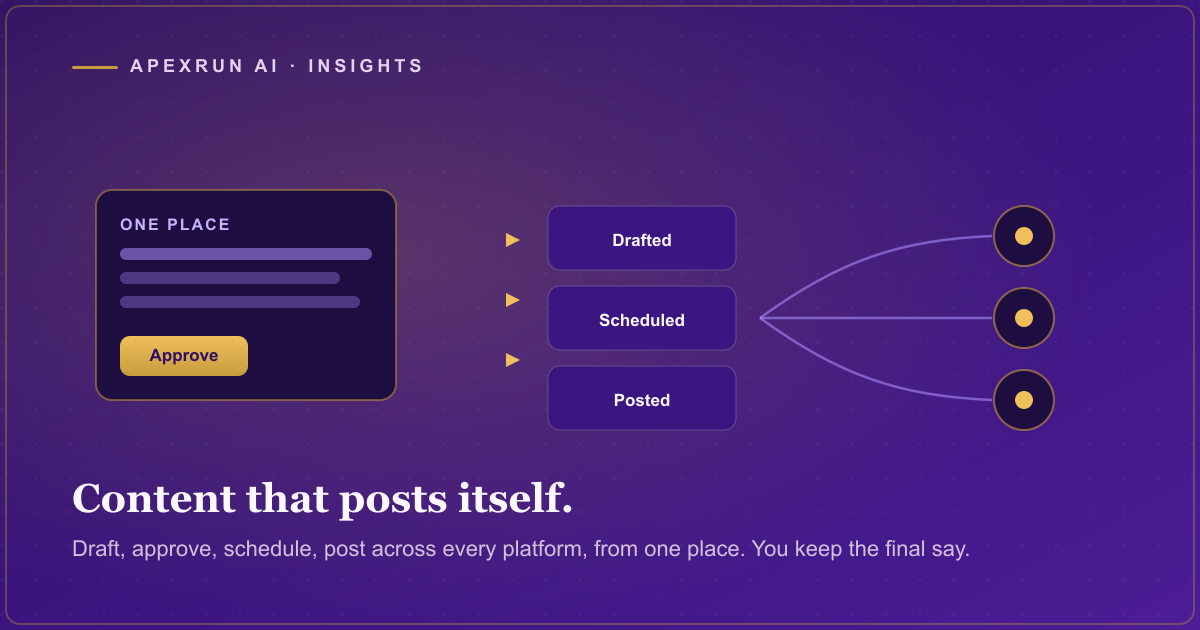
Now the system can reach out, not just respond. This layer produces and distributes: drafting content, keeping the follow-up cadence, writing the posts, running the outreach in your voice. It sits above communication because outbound is harder than inbound. Reaching the right person with the right message at the right time requires both the context to know what to say and the communication machinery to say it well.
Marketing is where a lot of owners want to start, because it is the visible, exciting part. Starting here is a classic error. Marketing that runs before the layers beneath it are solid generates activity that lands on a business that cannot handle it: leads with no intake to catch them, follow-ups with no memory behind them. You get motion without conversion. Build the base first and this layer becomes an amplifier. Build it first and it becomes noise.
Layer four: intelligence
This is where the system stops being a set of helpers and starts being an advisor. The intelligence layer watches everything happening across the layers below and surfaces what matters: which leads are worth your time, what is slipping, where the money is leaking, what the numbers are telling you. It reads the whole operation and gives you the view you never had time to assemble by hand.
It sits fourth because it needs all three layers beneath it to have something to reason about. Intelligence with no context, no communication history, and no marketing data is a dashboard with nothing on it. Once those layers are running and generating a real record of your business, this layer turns that record into decisions. This is often the layer owners did not know they wanted until they have it, because it hands them the pulse of the business in one place instead of scattered across a dozen tools and their own memory.
Layer five: automation
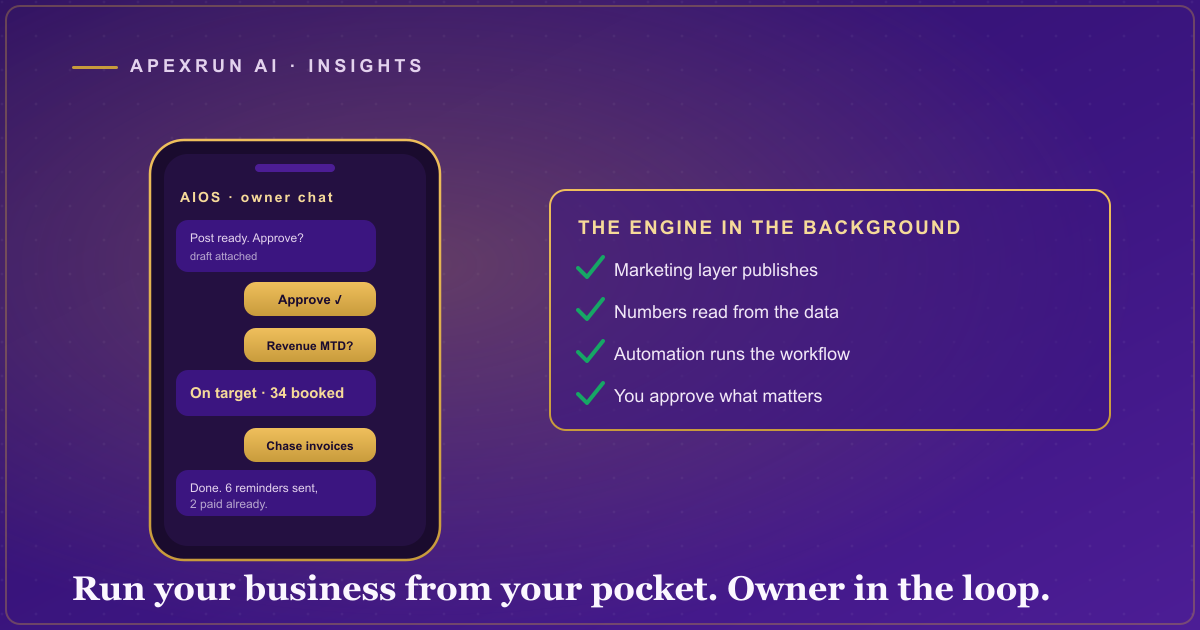
The top floor. Automation is where the system acts on its own: triggering the task, moving the record, kicking off the next step, closing the loop without waiting for a human to push it. This is the layer everyone imagines when they think of AI running a business, and it goes last for a reason that should be obvious by now. Automation is the most powerful layer and the most dangerous one, because it takes action. You only want it acting once the four layers beneath it are solid enough that its actions are correct.
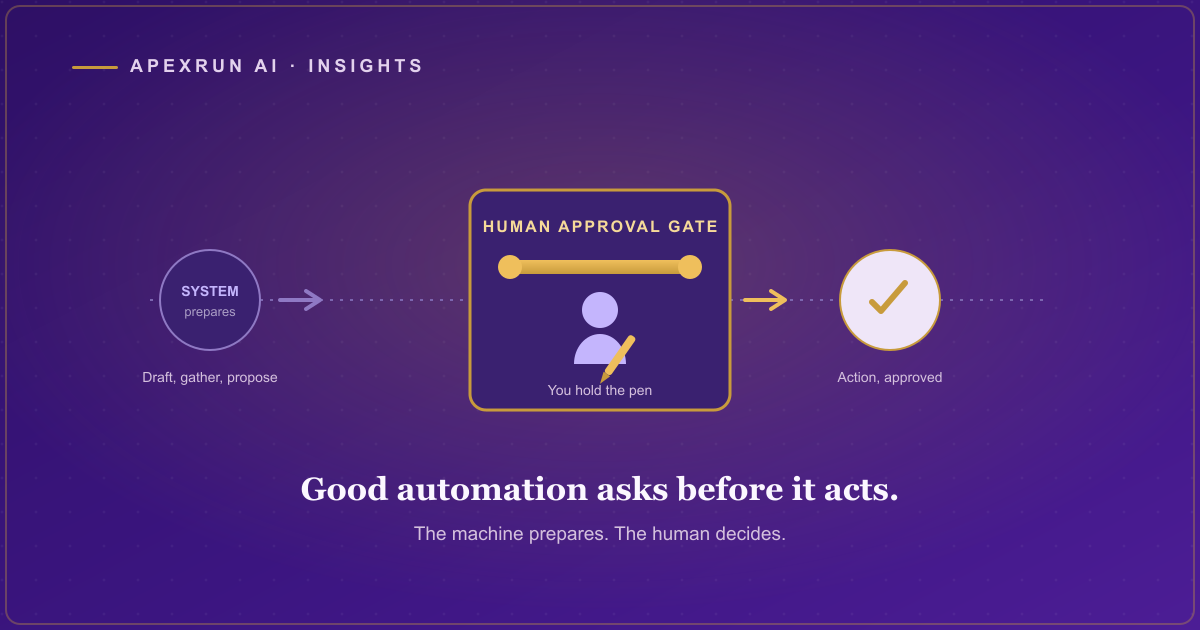
Automation on a weak foundation is how AI goes wrong in the expensive way: a system confidently doing the wrong thing at scale, fast, before anyone catches it. Automation on a strong foundation is a system that quietly runs the recurring work correctly, with human approval gates wherever a mistake would cost you. Same layer, opposite outcome, and the difference is entirely what is underneath it.
Why the order is the whole point
Here is the thing to take away. The five layers are not a menu you pick from. They are a sequence you build in. Context, then communication, then marketing, then intelligence, then automation. Each one depends on the ones below, and trying to skip ahead is the single most common reason AI spending produces nothing. Businesses buy the exciting top-layer capability, discover it has no foundation, and conclude AI does not work for them. AI worked fine. The building had no floors under the penthouse.
This is also why a coherent operating system beats a drawer of separate tools. Point solutions each live on their own island with their own thin slice of context, so they can never stack. An operating system shares one foundation across all five layers, which is what lets the whole thing compound instead of fragment. If you want to see which layers matter most for your specific business, the breakdowns on our industries page show where different professions get the most from each.
The fastest way to know which layer to build first in your business is the Free CEO Audit. In one hour, direct with the decision-maker, we map your operation against the five layers, find the foundation you already have and the gaps you do not, and hand you a prioritized plan, so you build in the right order instead of buying the penthouse first.