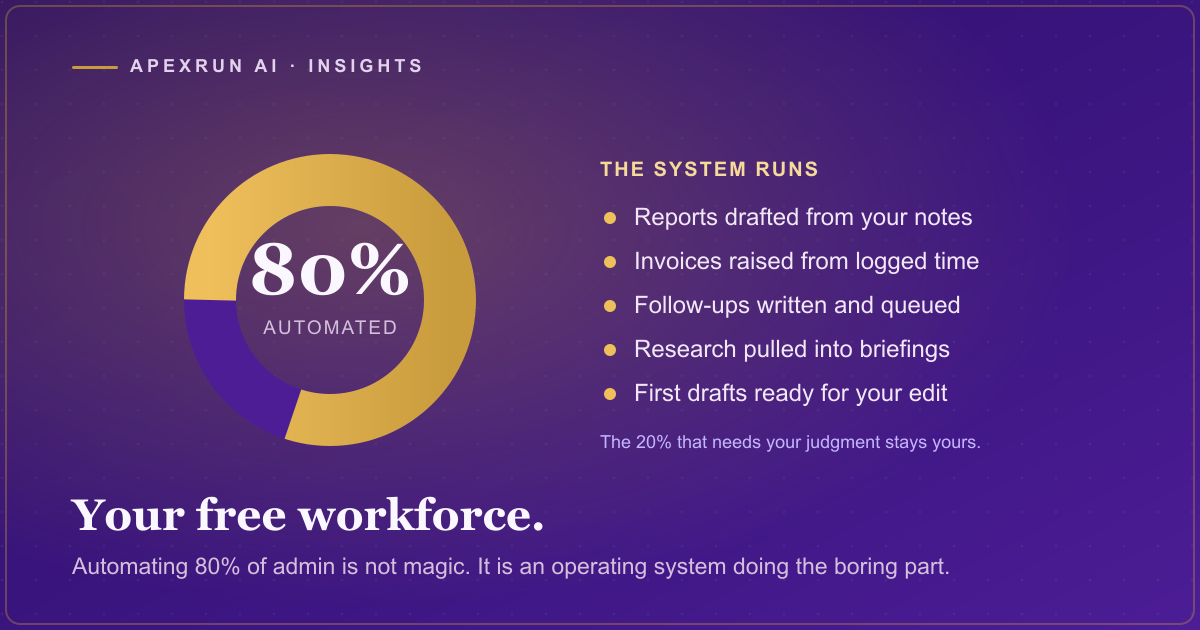
When I tell an owner they can automate 80 percent of their admin tasks, the reaction is usually a polite version of “sure you can.” They have heard the pitch before, bought a tool, and ended up with one more thing to manage. So let me drop the slogan and show you the actual before-and-after, task by task, because “80 percent of admin” is not a magic number I am waving around. It is what is left once you look at the recurring work in a business and separate the part that needs a human brain from the part that just needs to get done.
The 80 percent is not the important 80 percent. It is the boring 80 percent. That distinction is the whole point, and it is why this works.
The word “workforce” is deliberate
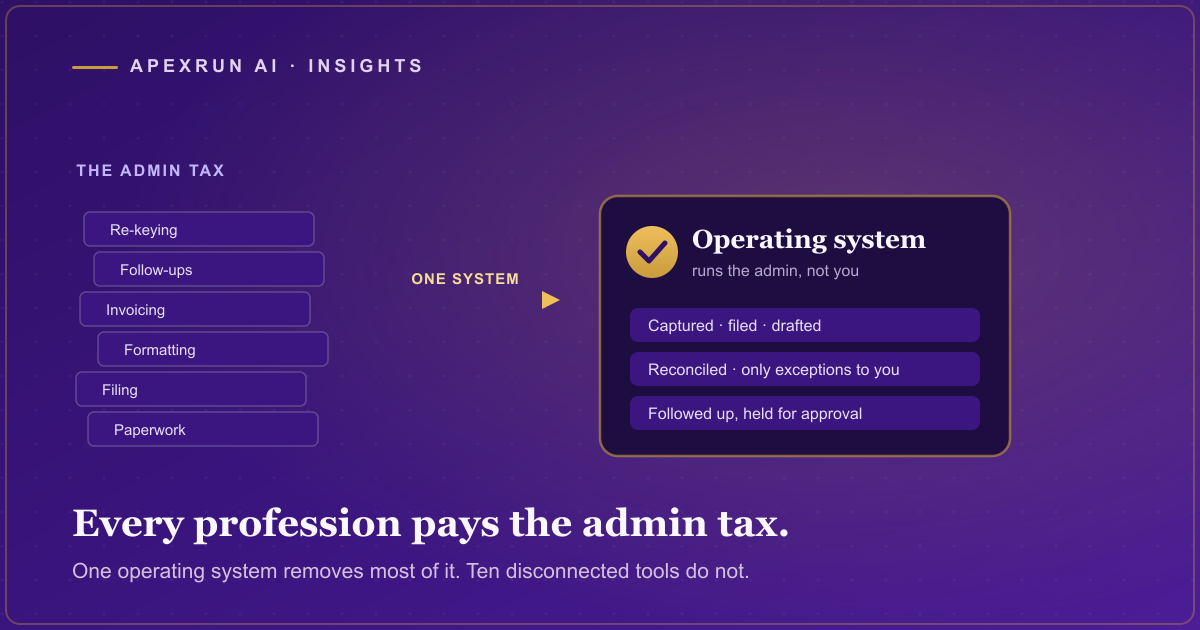
People call this automation, which is technically right and completely undersells it. A single automation replaces one task. What an AI operating system gives you is closer to a workforce: something that shows up every day, does the repetitive work across your whole operation, does not take holidays, and hands the tricky bits back to you for a decision. You do not recruit it, train it for six months, or manage its mood. It runs the admin, and it runs it constantly.
Free is doing some work in that headline, so let me be honest about it. It is not free to set up, and if you run it in the cloud you pay per use. Run it on your own machine, though, and after the hardware is paid off the running cost is basically electricity. Either way, compared to the salaried hours it takes off your plate, “free workforce” is the closest plain-English description of what it feels like to operate.
Here is what it actually does, in the five places admin quietly eats your week.
Reports
Before: someone on your team, or you, sits down at the end of the week and assembles the report. Pulls the numbers, copies them into a template, writes the summary, formats it, sends it. An hour, maybe two, of work that produces something people skim for thirty seconds.
After: the system pulls the numbers itself, drops them into your format, writes the plain-English summary, and puts a finished draft in front of you. You read it, fix the one thing it got slightly wrong, and send. The two hours became ten minutes of review. The report did not get worse. You just stopped being the one assembling it.
Invoices
Before: the work gets done, then days later someone remembers to invoice it, digs up the logged time, builds the invoice, and sends it. Sometimes it slips a week. Sometimes it slips a month, which is money sitting in a drawer.
After: the system generates the invoice from the logged time the moment the work closes, formats it correctly, and queues it for your approval. Nothing slips, because remembering is not a human job anymore. You are approving invoices instead of building them, and they go out on time, which quietly improves your cash flow as a side effect.
Follow-ups
Before: this is the big one, and it is where most businesses bleed. A lead comes in, or a quote goes out, and the follow-up depends on someone being free to write it and remembering to. When the day is full, the follow-up is what gets dropped. You lose deals you were already halfway to winning, and you never see them go.
After: the system drafts the follow-up the moment it is due, in your voice, referencing the actual conversation, and holds it for your send or sends it on a rule you set. The follow-up that used to depend on spare time now depends on nothing. This single change often pays for the whole system, because the revenue you were losing to silence comes back.
Research
Before: you need to get up to speed on something. A market, a company, a regulation, a question a client asked. You spend forty minutes reading and pulling it together into something usable.
After: the system does the reading and hands you a briefing. Not a final answer you trust blindly, a starting draft that collapses the forty minutes of gathering into five minutes of checking. You still apply your judgment. You just skip the grunt work of assembly.
Drafts
Before: every document starts from a blank page. The proposal, the email, the summary, the outline. The blank page is where the time goes, not the editing.
After: the system produces the first draft from your notes and your past work. You are never staring at nothing. You edit instead of create, which is faster and, for most people, far less draining. The 20 percent you keep is the judgment: what to say, what to cut, what carries risk. The 80 percent you hand off is the typing.
Why the 20 percent you keep matters
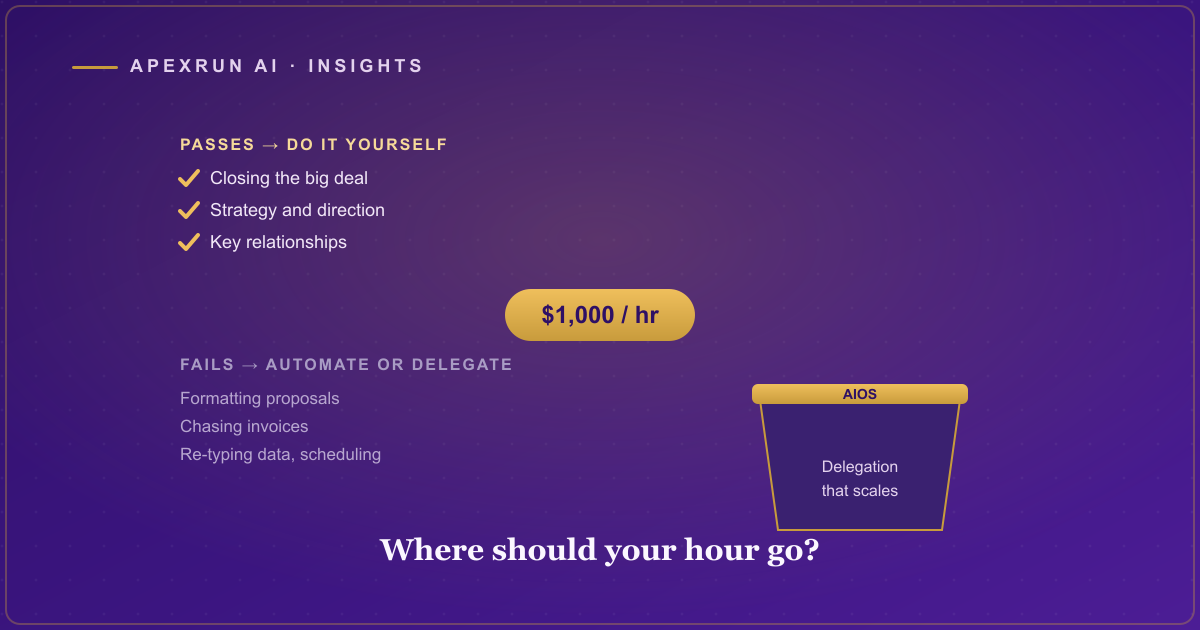
Notice what stays yours in every one of those. The decision to send. The judgment call on the tricky case. The relationship. The thing that carries consequence. Good automation does not try to take that, and you should be suspicious of anything that claims it does. Wherever a mistake would be costly, a human approval gate stays in place, so you are reviewing work rather than producing it from scratch. That is the difference between a system that helps and a system that goes rogue, and it is the reason owners trust this once they see it run.
The mistake most people make is trying to get to 80 percent by buying eight disconnected tools and hoping they add up. They do not add up. Each one solves a task and creates two more around it, and you end up more scattered than when you started. I wrote about that trap in Doing AI Badly Is Worse Than Not Doing It, because it is the most common way businesses waste money on AI. The 80 percent comes from one coherent system running the flow end to end, not from a drawer of gadgets.
What this frees up
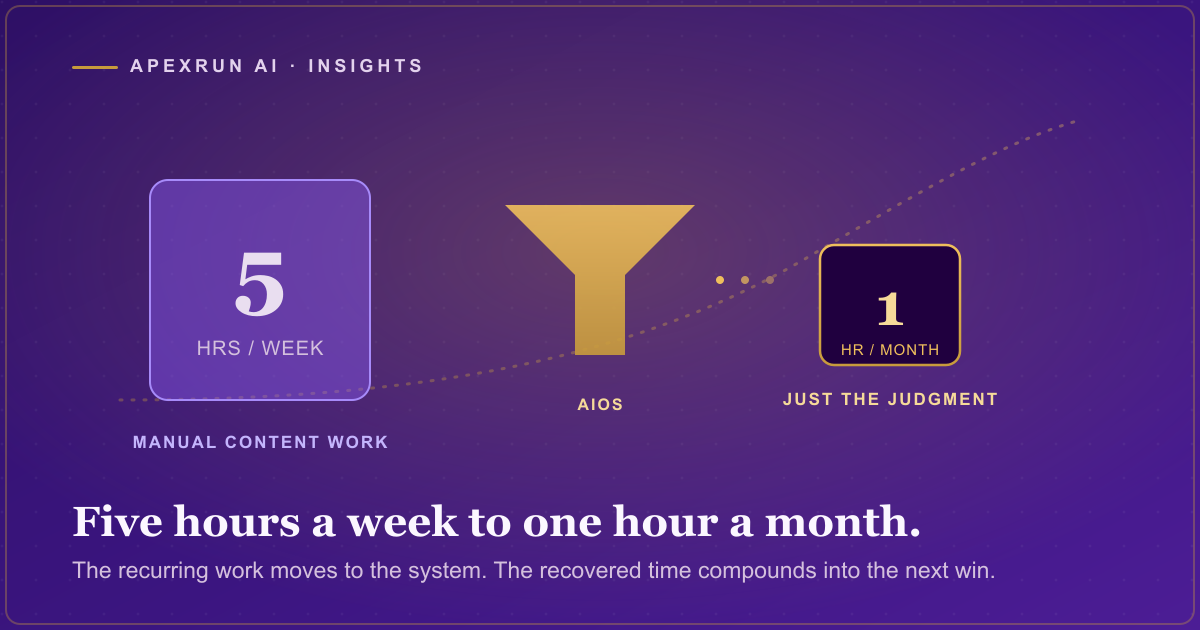
Run the five swaps above across a normal week and the reclaimed hours are not small. What matters is not that you saved them, it is where they go. Every hour the system takes off the boring pile is an hour that moves to the pile only you can do: winning clients, serving them better, building the next thing. That is the actual return. The admin was never the job. It was the tax on the job, and you can stop paying most of it.
If you want to see how this maps onto your specific business, the sector breakdowns on our industries page show where the 80 percent tends to hide in each profession.
The fastest way to find your 80 percent is the Free CEO Audit. In one hour, direct with the decision-maker, we walk through your recurring admin, separate the boring 80 from the judgment 20, and hand you a prioritized plan for what to automate first, so you build the free workforce on the highest-return work instead of guessing.