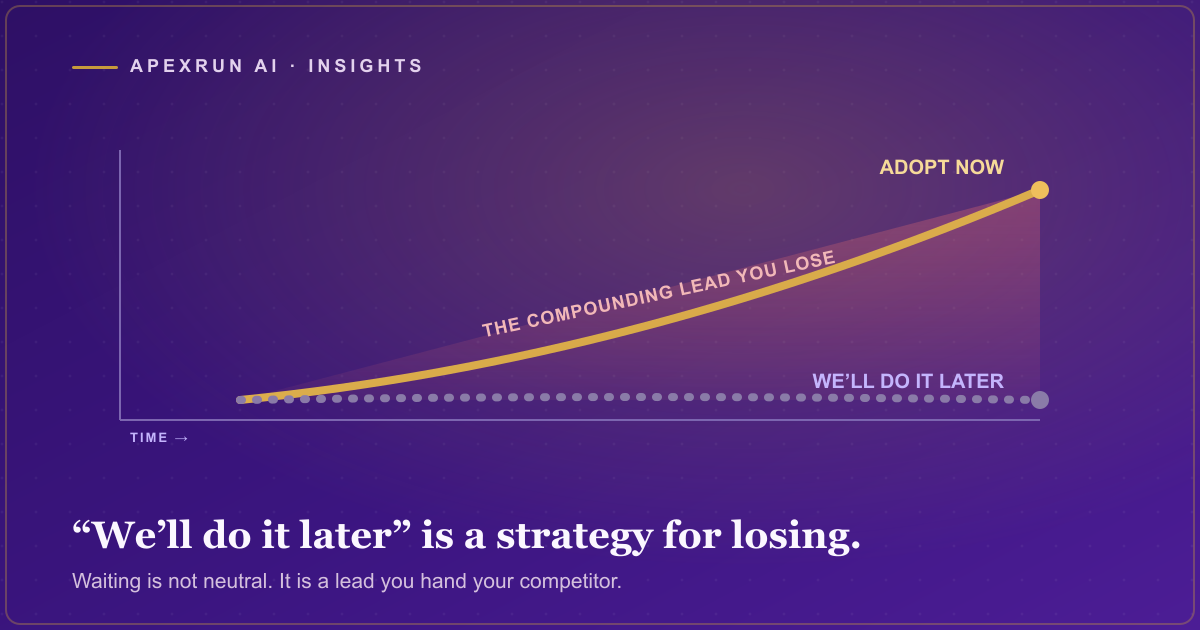
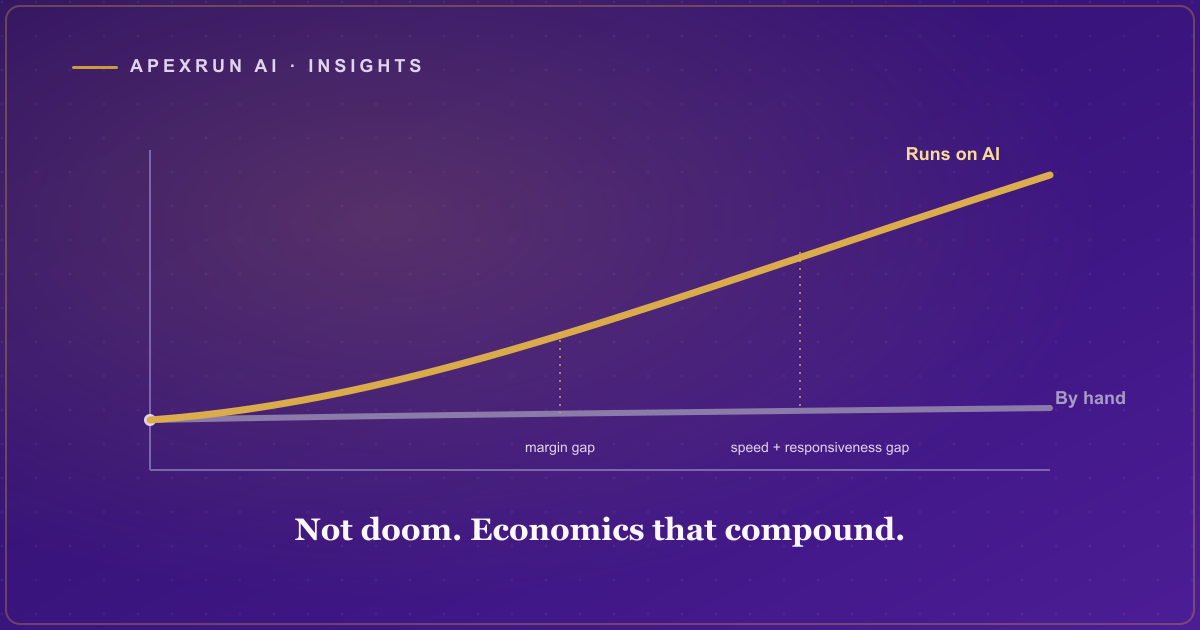
There is a split coming in almost every industry, and AI adoption and business survival are turning into the same conversation whether owners want them to or not. I want to be careful here, because this topic attracts a lot of breathless nonsense. This is not a prediction that robots take over or that everyone without a chatbot goes bankrupt by Christmas. It is something quieter and more certain than that. It is economics. When some businesses run their operations on AI and their competitors run theirs by hand, gaps open up between them, and those gaps compound until they are impossible to close through effort alone.
I am going to make the case plainly, without the hype, because the hype actually obscures the real risk. The danger is not dramatic. It is gradual, and it is arithmetic.
This is not doom, it is a cost structure
Start with margin. Two businesses in the same industry, same size, same prices. One runs its admin, follow-up, drafting, and reporting through a system. The other pays people to do all of it by hand. The first business carries a lower cost to produce the same work. That is not a motivational claim, it is a line on a profit-and-loss statement. Lower cost on the same revenue means more margin, and more margin means more room to invest, to cut price when they choose to, to weather a slow quarter, or to simply take more home.
Now run that forward. The lower-cost business reinvests some of that margin into growing faster, or undercuts on price in a way the higher-cost business cannot match without bleeding. The higher-cost competitor is not losing because they are worse at the actual work. They are losing because their cost structure is heavier, and a heavier cost structure loses slowly and then all at once. This is the same compounding I described in the two-year gap, a small operational edge does not stay small.
The three gaps that open, and why they widen
There are three places the split shows up, and each one gets harder to close over time rather than easier.
The margin gap. Covered above. The AI-run business does the same work at a lower cost, and every month that difference either drops to the bottom line or funds faster growth. The business doing it by hand cannot close this gap by working harder, because the gap is structural. Their people are already working. Adding more of them adds cost, which is the wrong direction.
The speed gap. The AI-run business responds to a lead in minutes, turns a proposal around same-day, and never has work sitting in a queue waiting for a person to get to it. The by-hand business responds when someone is free. In a market where the first credible response often wins the deal, speed is not a nicety, it is the sale. And speed compounds into reputation: the fast business becomes known as the one that is on it, and that reputation pulls in more work, which funds more capacity.
The responsiveness gap. The AI-run business follows up every time, chases every quote, never drops a lead because someone was on holiday. The by-hand business follows up when it remembers, which under load means it does not. Over a year, the difference between chasing every opportunity and chasing most of them is a large number of deals that simply went to whoever answered. These are not lost to a better competitor. They are lost to a more responsive one.
Why the gap becomes impossible to close by hand
Here is the part owners miss, and it is the whole point. Each of these gaps could, in theory, be closed by throwing people at it. Hire more admin to match the speed. Hire more staff to match the follow-up. But that is exactly the move that does not work, because it closes the gap by raising your cost, which widens the margin gap you were already behind on. You cannot out-hire a lower cost structure. Every person you add to keep pace makes your economics worse relative to the competitor who did not have to add them.
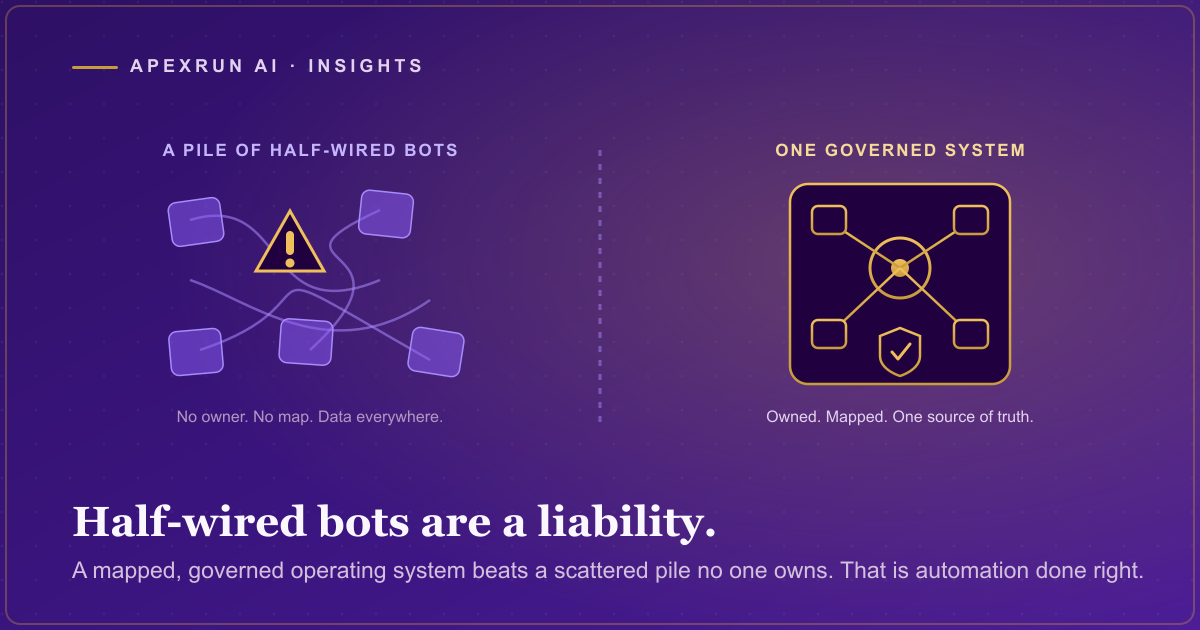
That is why this is a split and not just a race. In a race, effort closes the distance. In this split, the obvious way to catch up on speed and responsiveness makes your margin problem worse, and the obvious way to fix margin means cutting the very people who were keeping you competitive on speed. The by-hand business gets caught in a pincer of its own cost structure. The only real exit is the one the competitor already took: change how the work gets done, not how many people do it. This is what running the work through a system, rather than a drawer of disconnected tools, actually buys you, a point I made in the efficiency flywheel.
What this does not mean
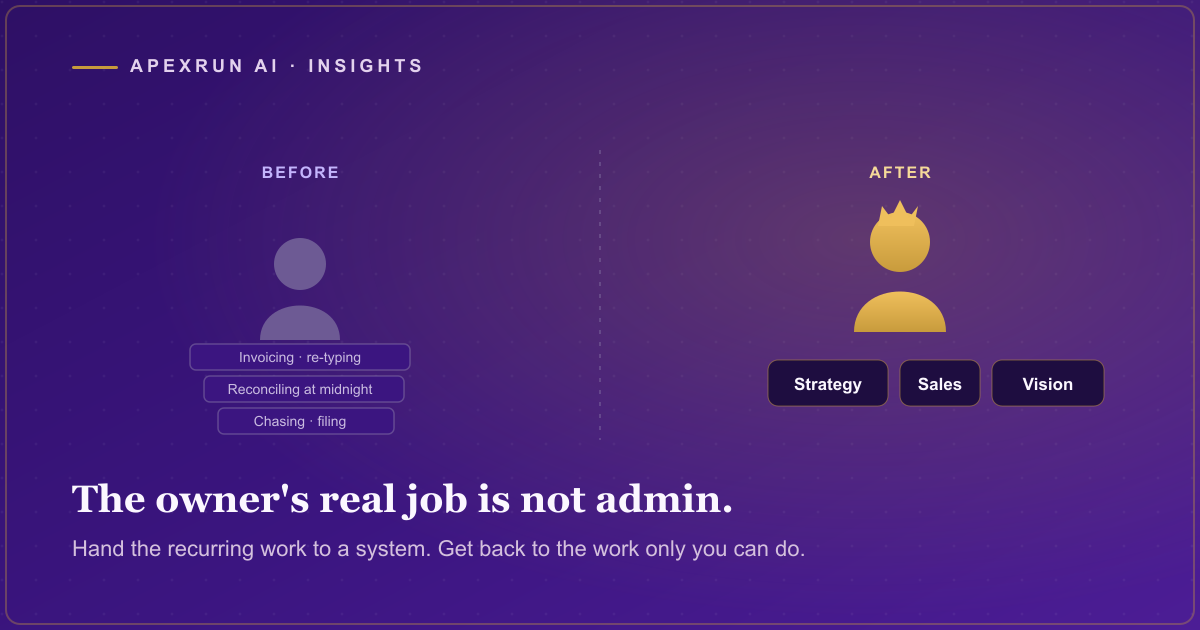
Let me be honest about the limits, because a claim with no limits is a sales pitch. This does not mean AI wins every business. The parts of your work that are genuine judgment, deep relationships, craft, and physical presence are not where the split happens. A business built on those things, with the repetitive operational layer running efficiently underneath, is in the strongest position of all. The split is not human versus machine. It is a business that has automated its operational layer versus a business that is still paying premium human hours to run it, and the first one has freed its people for exactly the judgment and relationship work that the second one has no time left for.
It also does not mean you need to move this week or lose everything. It means the gap is opening now, quietly, on the businesses in your market who moved first, and that closing it later costs more than opening it now, because you will be closing it against a competitor who has been compounding their lead the whole time. You can see how this plays out concretely in the industries we work with.
Where to start
You do not fix a structural gap by buying software in a panic. You fix it by looking honestly at where your cost, your speed, and your responsiveness sit today against where they could sit, and then automating the operational layer deliberately, highest-return work first.
That is what the Free CEO Audit is for. In one hour, direct with the decision-maker, we map where your business is carrying cost and losing speed that a system could take back, and hand you a prioritized plan, so you know exactly which side of the split you are on and what it takes to be on the right one, before you spend a dollar. The split is coming either way. The audit tells you where you stand in it.