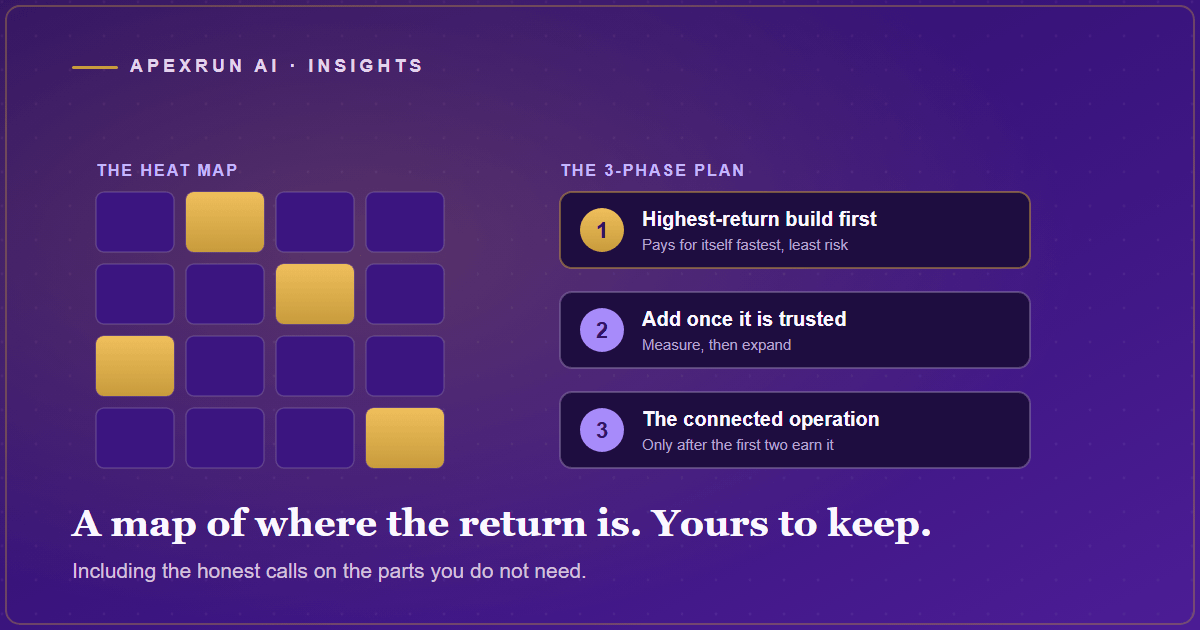
An AI audit for business usually means a thin questionnaire, a generic PDF, and a hard push to buy something you did not need. Ours costs $2,500, and that whole amount is credited in full toward Phase 1 of your implementation, so let me be specific about what it actually produces, because the value is in the specifics, and vague reassurance is exactly the thing this article is trying to replace. In one hour, direct with the person who runs the business, the audit produces three concrete things: a heat map of where your time and money leak, a three-phase build plan in priority order, and a set of honest calls about the parts of your operation that do not need AI at all. Then it ends. There is no obligation to build anything after it.
Why an AI audit for business is not a trick
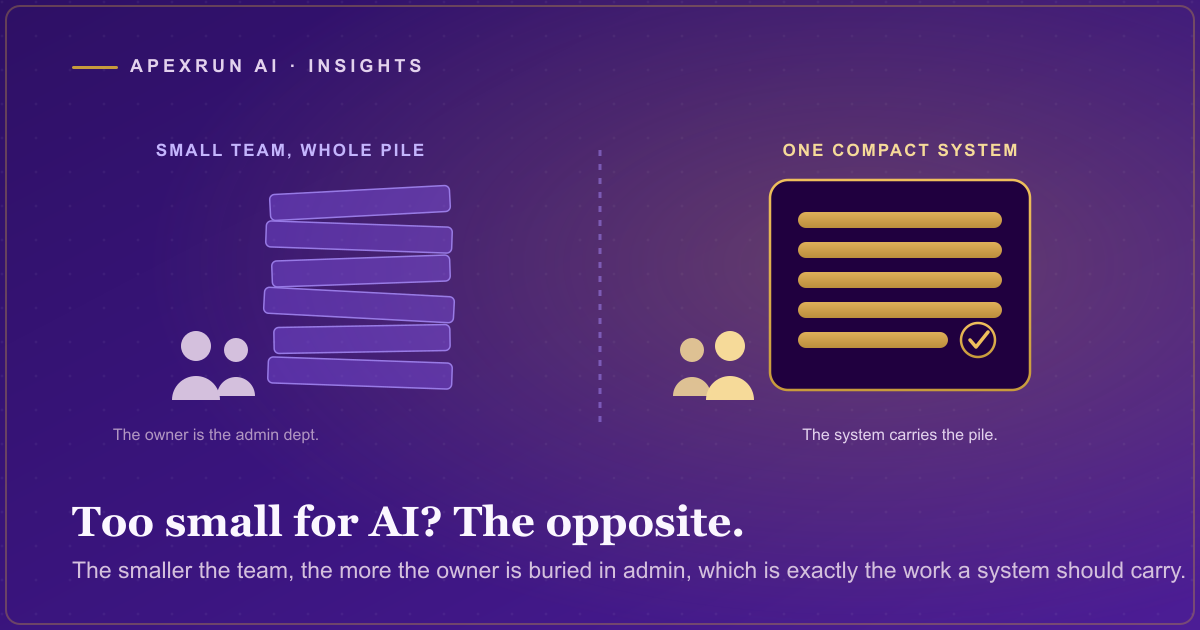
The audit is worth paying for because it is the useful part, not the bait for a sale. Most owners do not have an AI problem. They have a clarity problem. They know they are losing hours to something, they suspect software could help, and they have no idea which task to fix first or whether the shiny tool a competitor bought is actually the right move. The single most valuable thing anyone can hand them is not a product. It is a clear map of where the return is and in what order to chase it.
That map is worth having whether or not you ever build anything with us. If you take the plan and hand it to your own team, or a different vendor, or your nephew who is good with computers, the audit still did its job. That is also why the fee is credited in full toward Phase 1: if the map is good, a fair share of people choose to have us do the build. We do not need to trap you into it. If the map is good, some of you will want the people who drew it. That is the entire business model, and it only works if the map is real.
The first thing it finds: a heat map of where the time goes
The core output is a heat map of your operation. We walk through what actually happens in a normal week, task by task, and we mark each one on two axes: how much of your time and money it eats, and how well suited it is to being handled by an AI operating system. Most tasks land in the cool zone, where they are either cheap already or genuinely need a human. A handful light up hot.
Those hot cells are the whole point. They are the tasks that are high volume, repetitive, and rule-based enough to automate, but that are currently being done by an expensive human, often you. The intake that never gets answered fast enough. The report that eats a professional’s evening. The reconciliation that steals a whole day each month. The follow-ups that quietly do not happen. Until you see them mapped, they hide, because each one feels small in the moment and only reveals itself as expensive when you add up the year. The heat map is what makes the invisible cost visible, and it is usually the moment in the hour where an owner goes quiet, because the number is bigger than they thought.
The second thing it finds: a three-phase plan, in order
A list of opportunities is not a plan. If I hand you nine things you could automate, I have handed you a new source of overwhelm, not a solution. So the second output sequences them.
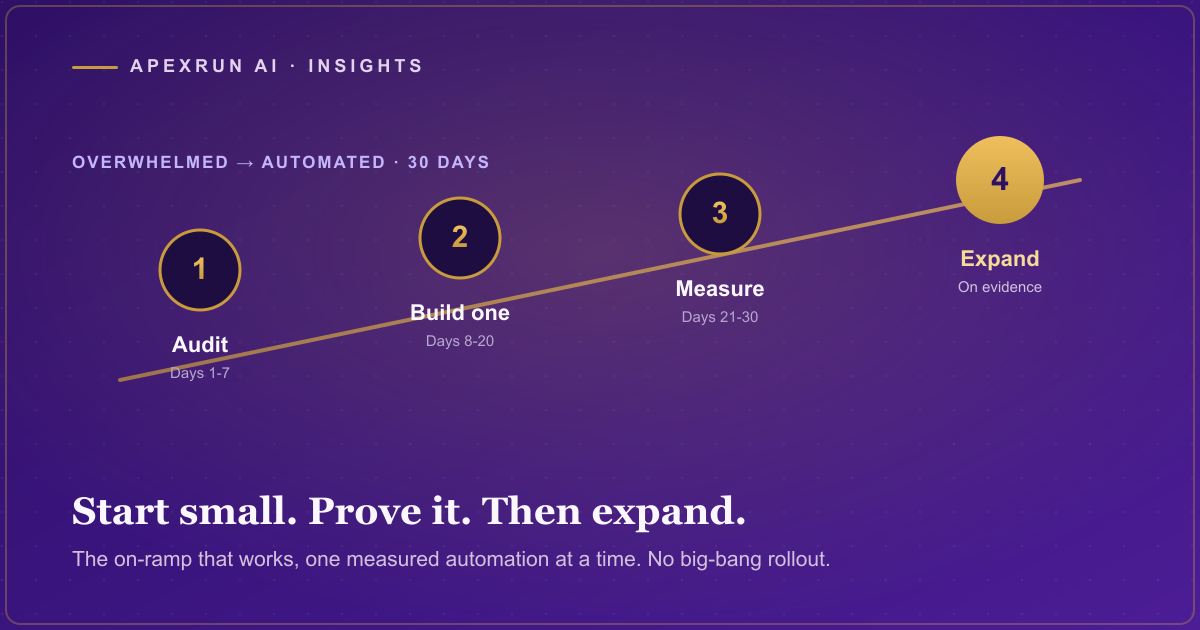
Phase one is the single highest-return build, the one that pays for itself fastest and proves the whole idea with the least risk. Phase two is what you add once phase one is running and trusted. Phase three is the fuller operation, the connected system that runs a large share of your admin, which only makes sense to reach for after the first two have earned it. This staged path is the same audit-to-autonomy progression we deploy against in real businesses: you never bet the operation on a big-bang rollout, you build the first thing, measure it, and let the results fund the next step. The plan tells you exactly where to start and, just as importantly, what to deliberately not do yet.
The third thing it finds: what you do not need
This is the part that surprises people, and it is the part that makes the rest credible. A real audit tells you where AI is the wrong answer.
Sometimes a task that looks automatable is actually the relationship work that wins your clients, and putting a machine on it would quietly damage the thing that makes you money. Sometimes the honest call is that your volume is too low to justify a build, and you should keep doing it by hand for another year. Sometimes the fix is not AI at all, it is a process you never tightened or a tool you already pay for and do not use. I would rather tell you that in the audit than sell you a system you did not need and watch it underdeliver, because an oversold build is how you end up as one of the businesses that concluded AI does not work. It works. It just has to be pointed at the right tasks, and part of pointing it correctly is naming the tasks to leave alone.
Why the hour is with the decision-maker, not a rep
One structural detail matters. The audit is run direct with the person who actually runs the business, not a junior salesperson reading from a script. That is deliberate, because the quality of the map depends entirely on the quality of the conversation, and the person who feels the pain in their own week is the only one who can point at the hot cells accurately. It also means the honest calls carry weight, because they come from someone who has seen where these builds succeed and where they quietly fail across a lot of different industries, not from someone paid to move a unit.
At the end you have a document you can act on, with or without us. If you want to understand what a full build looks like once the plan points there, the packages lay out the shape of it. But the audit comes first, because the map is the most useful thing we can give you and the surest way to show we are worth hiring for the build. The $2,500 is credited in full toward Phase 1 of your implementation.
If you have been circling the AI question for a year without a clear next step, the CEO Audit is the shortest path to one. Book the hour, get the heat map and the phased plan, and decide from there. Either way, you leave knowing exactly what your busywork is costing you and which single task to fix first.