A clinic or med spa lives and dies on two things: the appointments that get booked and the patients who come back. Both of them run through the front desk, and the front desk is exactly where most practices are quietly bleeding. A phone that rings while your one receptionist is with a patient. A voicemail nobody returns until tomorrow. A follow-up that never goes out because the day got busy. An AI receptionist for clinics and med spas closes every one of those gaps, and it does it on a model that can run in your own building so patient data never leaves.
The missed call is the one that hurts most, because it is invisible. A patient rings to book, gets voicemail, hangs up, and calls the clinic down the street. You never see that call, so you never count the loss. But it is a booking that walked out the door in the ten seconds it took to reach your voicemail, and it happens more than any owner wants to believe.
What an AI receptionist for clinics actually does
This is not a phone tree that makes people press 4. It is a voice and messaging agent that talks like a competent front-desk person and handles the work end to end.
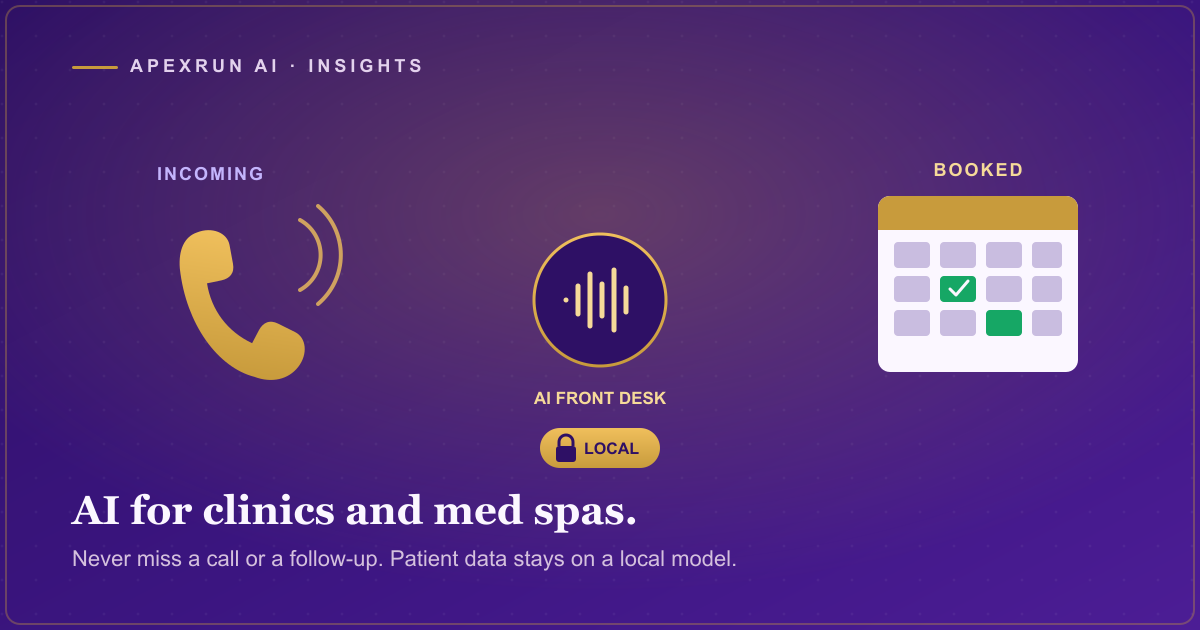
It answers every call, immediately. No voicemail, no hold music into the void, no lost booking because your receptionist was already on the line or with a patient. Every caller gets picked up on the first ring, day or night, and gets booked or handled right then. The after-hours calls you never even knew you were missing start converting into appointments.
It books, reschedules, and confirms. The agent checks real availability, books the slot, reschedules the change, and confirms the appointment, writing straight into your calendar. No double-bookings, no phone tag, no gaps left by a message that never got passed along.
It runs reminders and cuts no-shows. No-shows are pure lost revenue, an empty chair you cannot resell on short notice. The system sends the reminder cadence automatically, confirms attendance, and fills a cancelled slot from the waitlist, so the schedule stays full without anyone working the phones to keep it that way.
It handles follow-ups and appropriate cross-sell. The post-treatment check-in. The “you are due for your next visit” nudge. The relevant add-on a patient would genuinely want. This is the retention and revenue work that busy front desks drop first, and it is where a lot of a practice’s growth actually hides. The system runs it every time, in your voice, with a human approval gate wherever clinical judgment or sensitivity is involved.
The net effect is a front desk that never sleeps, never takes a lunch, and never drops the call that would have been your next booking. Your human staff stop being switchboard operators and go back to caring for the patients in front of them.
The part that matters most in healthcare: patient data stays local
Here is where most AI pitches to clinics fall apart, and rightly so. You handle health information. Sending patient details to a cloud AI service in a US data centre is not a minor detail, it is a real privacy and compliance exposure, and any clinic owner who waves it off is not thinking clearly about their obligations to patients.
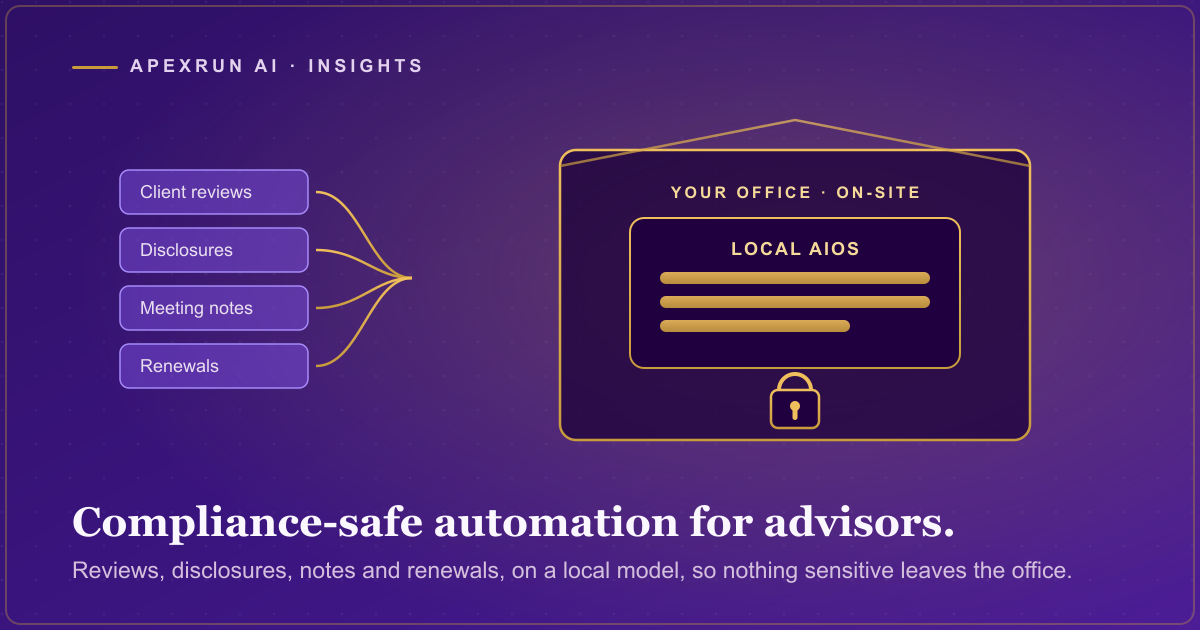
An AI operating system does not have to work that way. It can run on a machine in your own clinic, on a local model, so patient information never leaves your building and never crosses the border into someone else’s data centre. You get the automated front desk and you keep custody of the sensitive data. For an Ontario clinic weighing PHIPA and patient trust, that is the difference between an AI receptionist you can actually deploy and one your privacy obligations forbid. The reasoning behind keeping regulated data in your own hands is laid out in full in why your data should stay in Canada.
This is the point most conversations skip. The efficiency of an AI front desk is easy to want. The data staying local is what makes it safe for a healthcare practice to turn on.
The revenue math clinics keep missing
Play it out. Suppose your clinic misses even a handful of bookable calls a week because the line was busy or it was after hours [ESTIMATED, varies by practice]. Each of those is an appointment, and each appointment is not a one-time value, it is a patient who might have come back for years. The lifetime value of a captured patient dwarfs the cost of never missing the call in the first place.
Now add the no-shows the reminder cadence prevents, and the follow-up visits the automated nudges bring back, and the add-ons an attentive system surfaces at the right moment. None of this is a gimmick. It is the ordinary front-desk work of booking, reminding, and following up, done every single time instead of only on the days the desk was not slammed. Consistency is the entire edge, and consistency is exactly what a system delivers and a busy human cannot.
Why a system beats another point tool
A clinic could bolt on a booking widget, a separate reminder app, and a follow-up tool, and end up with three disconnected gadgets that do not talk to each other. Then someone has to move data between them, and the seams become the new admin. That is not a front desk, it is a to-do list with extra steps.
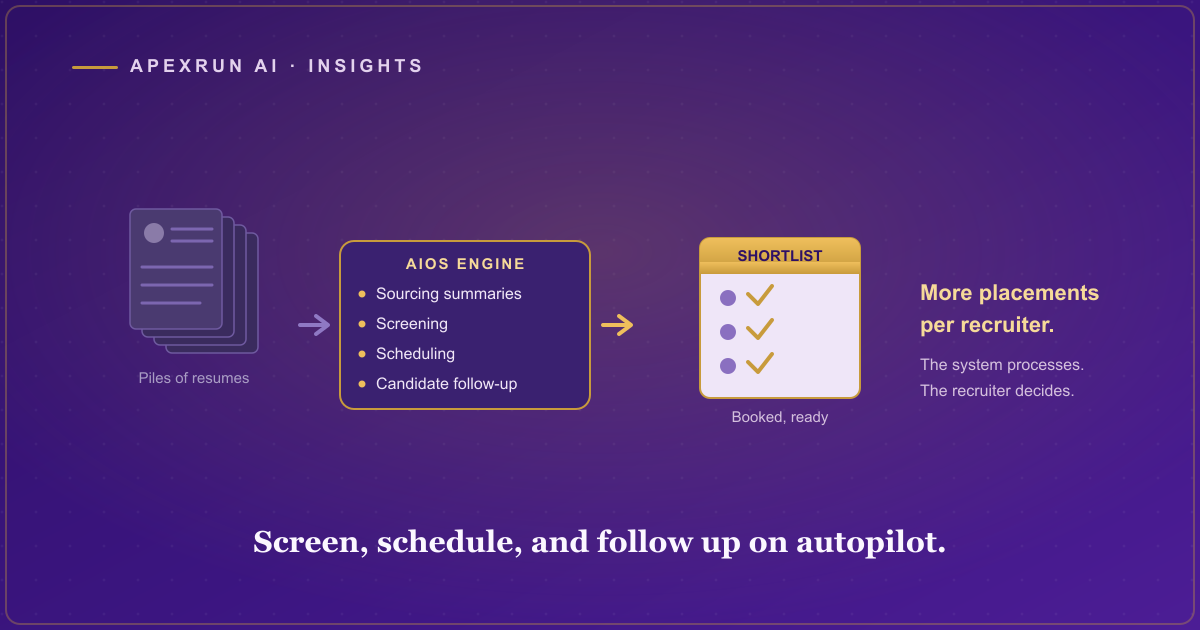
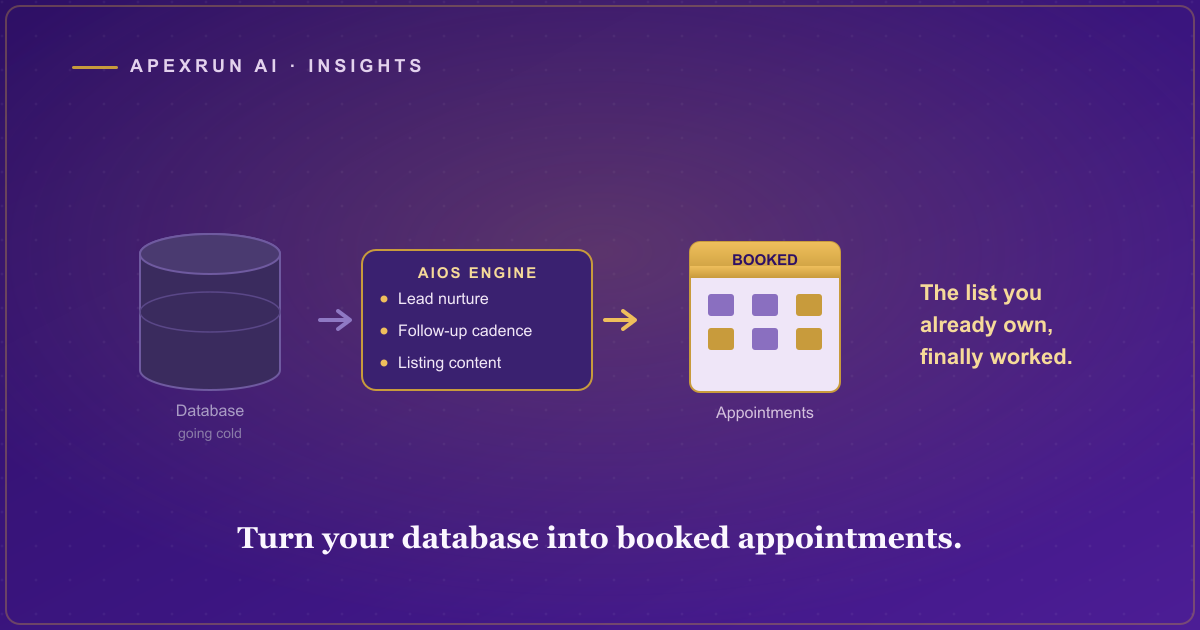
An operating system runs booking, reminders, and follow-up as one connected flow, because in a real clinic they are one flow: the booking sets the reminder, the visit triggers the follow-up, the follow-up books the next visit. When those connect, the schedule fills itself. If you want the healthcare-specific picture, our healthcare page shows how this maps to a clinic, and what an AIOS is explains why the connected system compounds where separate tools just add overhead.
Where to start
Do not buy a booking bot and hope it fixes the front desk. Map where your practice is actually losing appointments and follow-ups first, then automate the highest-leakage point, with patient data kept local from day one.
That mapping is exactly what the Free CEO Audit does. In one hour, direct with the decision-maker, we walk through where your clinic is losing calls, no-shows, and follow-ups, show you how a local AI receptionist would close those gaps, and hand you a prioritized plan, so you know what to build first before you spend a dollar. The missed calls are costing you more than the fix.